
 0407 160 107

 View all blog posts

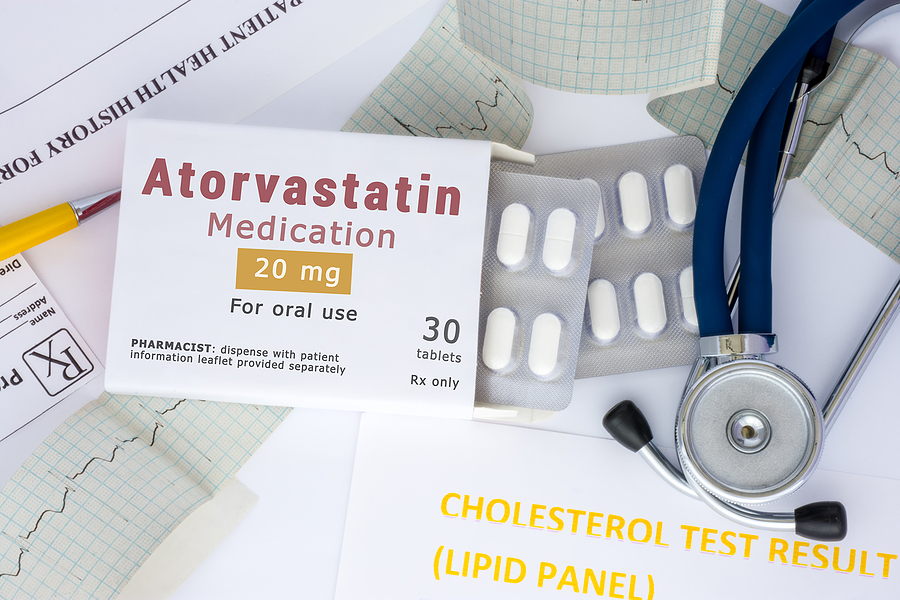
That’s what the results of a big, acclaimed Australian study point to.
You might’ve read about it in the newspapers, given we’re the generation who vaguely remembers what newspapers are.
The headlines included: ‘Statins can safely cut risk of heart attacks or strokes in healthy people over 70, world-first clinical trial shows’ and ‘This common medication cuts heart attack risk in older people’.
In a nutshell, the story was that this trial had answered one of the big questions in cardio-vascular medicine: are statins safe and effective for people over 70 who’ve never had a heart attack, stroke, or heart surgery?
Although they’re routinely prescribed if we have heart disease or we’re considered to be at risk (e.g. because of diabetes or high cholesterol), it wasn’t clear whether they’re suitable as a preventative if we’re 70 or older and have no issues.
In a result that should’ve surprised absolutely no one, the ‘Statins in Reducing Events in the Elderly’ (STAREE) trial led by researchers at Monash University confirmed that they are indeed both safe and effective.
Almost 10,000 people (men and women, average age 75 at the start) participated in the study in which they were to take either a statin or a placebo for 5.9 years.
The Guardian’s medical reporter explained that this was a scientifically robust type of study known as a randomised controlled trial, and it showed that taking a statin decreased the risk of a major cardiovascular event.
The lead researcher was quoted as saying that since the risk of cardiovascular disease increases with age, people over 70 are automatically in the high-risk category.
The University’s media release declared STAREE one of the largest cardiovascular disease prevention trials ever conducted in older people, placing Australia at the global forefront of healthy ageing research.
That noise you hear in the background is the sound of champagne corks popping, researchers patting themselves on the back, and streamers and confetti exploding into the air.
But despite the fanfare, not everyone agrees that this was either scientifically robust or that everyone over 70 needs a statin.
I’ll aim to outline what the trial showed, what the major criticisms have been from people who monitor scientific research standards, and what we might make of it.
Let’s start with what it showed
The two measures the researchers reported on after almost six years were major cardiovascular events (heart attack, stroke, and ‘coronary revascularisation’, i.e. stenting) and disability-free survival.
For major cardiovascular events there was a difference in favour of taking a statin — 6.0% of the statin group (297 people) vs. 8.3% of the placebo group (412 people) experienced one of these events, which isn’t all that many in a group aged between 70 and their 90s over nearly six years.
Given the inclusion of stenting (more about that shortly) the difference between the groups mightn’t be altogether surprising. One of the complaints directed at the study is that while heart attacks or strokes are objective (we either have one or we don’t), stenting is a decision made by a doctor, and doctors are more likely to do this in patients with high cholesterol who aren’t taking a statin.
Interestingly though, for women and the healthiest older people (in terms of BMI, blood pressure, and cholesterol) there was no significant difference between the statin and the placebo.
When it came to disability-free survival, there was no significant difference between the groups, i.e. taking a statin wasn’t shown to extend life or its quality.
So how much difference do statins make? Probably some for some people.
The main criticisms of the trial though come down to its lack of rigour. This showed up in some questionable scientific behaviour and changes that occurred during the trial.
The ‘science’
The scientific world is meant to be objective. This means that when you register your trial you say what you’ll investigate and how you’re going to do it.
Then you do it. When you report on your findings they should align with what you set out to do.
If however, you’re several years into your trial and you aren’t getting the outcomes you were looking for, and you go back and change what you said you were going to investigate to make your results look stronger, that’s a tad shady.
It’s what happened here. For example, stenting was added after a few years to beef up the significance of the ‘major cardiovascular events’. It’s manipulation of results and while it occurs, it shouldn’t. Especially when answers are being sought to important questions about drug prescription and people’s lives.
But unfortunately, researchers in this area automatically assume statins are beneficial, even when the evidence is lacking. Moreover, big trials like this are hugely expensive with a lot riding on them — careers, future funding, and so on. It would’ve been unthinkable to come away with nothing to show.
It was a randomly controlled trial, but how much control was there?
During the trial about 48% of the statin group and 57% of the placebo group
stopped taking their tablet (they weren’t intended to know which they were taking) but were still included in the analysis. What the?
Why did they stop? Mostly because their regular GP told them to or put them on a different statin (890 of the placebo people were also prescribed a statin by their GP), or because they just didn’t want to take a tablet, or they had adverse effects while taking it (this occurred for 349 of the statin people and 297 of the placebo people).
Across the period of the trial 10% of participants changed their statin (and maybe their dosage) from the one used in the trial to one their GP prescribed, while almost 20% in the placebo group were put on a statin by their regular GP.
How the heck do you come up with meaningful measurements for taking a statin vs a placebo with all of that going on?
The reason the researchers included every participant who started the trial in their final analysis, even though some participants switched horses, was to preserve the idea of two randomised groups.
But in this case it would’ve been useful to tell us the results for the people who actually stayed on their statin or placebo for the length of the study.
So it was hardly ‘scientifically robust’ as the woman from the Guardian claimed, and anything but controlled.
Somehow though, despite the waters being so muddied, and one in five of the placebo people taking a statin, more adverse effects were recorded in the statin group.
For example:
- Musculoskeletal issues: 32% in the statin group vs 29.4% in the placebo group
- Diabetes related issues: 4% vs 2.7%
- Liver, gallbladder, and pancreas issues: 3.3% vs 0.9%.
So what can we make of this, given many doctors will now be keen to have their patients over 70 taking a preventative statin? (Lipitor was used in the trial.) Despite it not being well-conducted, it’ll be held up to GPs as gospel.
Can statins help to avoid cardiovascular events in people with no history of these? As I said, probably, for some.
But not because they lower LDL. They can reduce inflammation and increase nitric oxide. Nitric oxide is a gas made by the body. It relaxes the blood vessels, increases blood flow, and lowers blood pressure.
Exercise and vegies such as beetroot and green leafy greens do the same, but how good is a tablet?
To avoid cardiovascular disease we need healthy arterial walls, and statins might help with that, especially among people who aren’t inclined towards healthy lifestyle behaviours.
If I was a GP dealing with older patients who aren’t keen on making lifestyle changes, addressing their stress levels, and so on, I’d be covering my tail by prescribing a statin too.
Of course, there are more adverse effects among people taking statins, so we always need to make sure the benefits outweigh the problems.
If though, you’re a woman and you’re healthy, even if you’ve reached the great age of 70, there’s not a single study, including this one, that proves that a statin will be good for you. Even this one couldn’t show that it’ll give you a longer or better life.
Photo Source: Bigstock

