
 0407 160 107

 View all blog posts

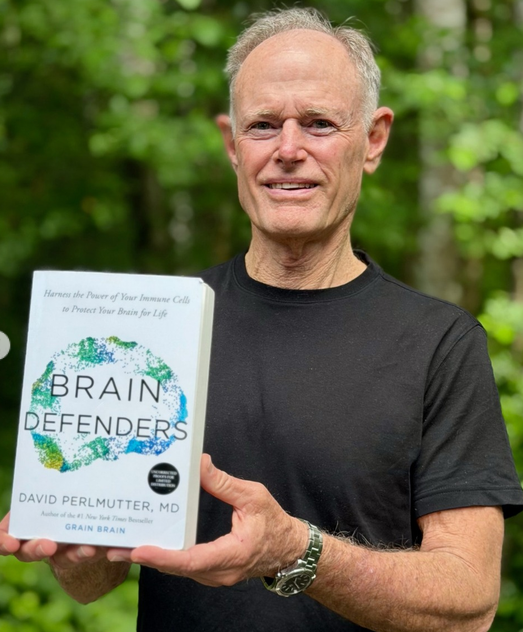
Is conventional medicine getting at the root cause? Neurologist David Perlmutter doesn’t think so.
Here’s his take from his recent book, Brain Defenders.
He’d agree with those looking at dementia more conventionally that we have to start tackling the disease 20 or 30 years before cognitive changes show up.
But whereas much of the current focus is on finding drugs that will clear plaques and tangles from the brain, he concentrates on what he believes causes the problem in the first place: the microglia, the brain’s own immune cells.
This is where things go wrong, he says. What’s interesting about these cells is that they can change their function and go from working for us to working against us.
When they work for us they remove damaged cells, support the growth of nerve cells, and repair synapses and brain tissue. They’re like mechanics, gardeners, and housekeepers, fixing, pruning, and cleaning up.
Brain Defenders is about how to keep them working for us, and the key to that, according to Dr Perlmutter is managing our metabolism.
He treats the brain as part of our whole-body metabolism, i.e. what’s going on above the neck reflects what’s going on below it.
It’s a similar message to that espoused by psychiatrist Georgia Ede. I wrote about her view on this late last year.
She says we don’t have to be sitting ducks for Alzheimer’s, waiting to see if it’ll come for us. What we should be told more often is that 80% of Alzheimer’s patients have insulin resistance.
In line with this she wrote a book called Change your Diet, Change your Mind.
Dr Perlmutter points out that insulin resistance in the body has implications for the brain — inflammation, mitochondrial dysfunction (the microglia get their energy from the mitochondria, which are tiny structures within our cells), and the brain itself becoming insulin resistant, which results in cognitive impairment.
He emphasises the connection between gut and brain, arguing that toxins from unhealthy gut bacteria can find their way into the blood stream and the brain. In other words, a healthy gut helps to keep the microglia taking care of our brain.
A healthy gut means avoiding highly processed food and artificial sweeteners and going lightly with alcohol. Alcohol can weaken our gut barrier, alter our metabolism, increase inflammation, and push the microglia into a destructive state.
Eating real food is the most obvious message. Dr Perlmutter also encourages prebiotic and probiotic (i.e. fermented) foods and healthy fibre, and leans towards supplements such as vitamin D, oily fish/omega-3, magnesium, and curcumin (from turmeric).
I digress, but as I’m writing this I’ve just come back from Woolies where I was standing behind a 60-something-year-old man who must’ve been buying every form of white bread they sell — all sorts of rolls, flat bread, and so on, along with a tub of ProActiv vegetable oil margarine.
There were a couple of items I didn’t see, probably things to put on his bread.
I know, he’s a bloke. Maybe on his own and looking for convenience. But there wasn’t a skerrick of fibre, or a nutrient for that matter, in that lot. I should mind my own business, but if this is his usual pattern it’s not going to go well. For his brain or anything else.
But back to the gut. Dr Perlmutter notes that medications such as antibiotics and proton pump inhibitors (PPIs, e.g. Nexium, Prilosec) alter the microbiome and increase permeability of the gut wall. He says multiple studies connect long-term PPI use with cognitive decline.
If or when we have to take either, it’s smart to do some extra gut support. PPIs are supposed to be used for a defined course of treatment rather than long-term.
Here are some of the other factors he says can shift our microglia into a damaging state:
Airborne pollutants — smoke, chemical cleaning products, pesticides, herbicides such as glyphosate (Roundup), factory and vehicle emissions, and microplastics. Scented candles and incense have a place on the list. Minimise the use of plastic, including plastic water bottles.
One of consequences of a more volatile climate is the increased risk of coming into contact with bushfire smoke, which is not at all good for brains.
Viruses such as pneumonia, covid, flu, etc. Some of us might have to weigh up impact of certain vaccines on our body, but we need to do our best to avoid our microglia being constantly provoked by viral infection.
The issue of whether the shingles or flu vax help prevent dementia is still up in the air. But not getting shingles or flu is always a bonus.
Head trauma goes without saying.
Ageing — not a lot we can do about this, but our microglia, like the rest of us, change with age. As we get older our protective blood-brain barrier becomes more permeable, allowing foreign molecules to enter. This can trigger inflammation and an immune reaction.
General anaesthetic — we might not be able to avoid that either, but after age 60 we’re more at risk of post-operative memory and thinking difficulty, which can last for weeks or months. We’re even more at risk if we have metabolic issues such as diabetes or obesity.
The loss of estrogen during menopause promotes inflammation. I referred to this in another article this month. Dr Perlmutter comes down on the side of hormone therapy, but the jury’s still out.
Steroid medications for asthma and rheumatoid arthritis can be problematic for the brain with prolonged use and might require a conversation with doctors.
Chronic stress keeps the microglia in a destructive, inflammatory state.
Insufficient sleep also creates inflammation.
He argues that plaques and tangles are the consequence of these factors — of insulin resistance, metabolic dysfunction, inflammation, poor gut health, and so on.
We’ve already identified some of the best ways to protect the brain, but exercise does this by increasing diversity of gut bacteria, reducing inflammation, stimulating the growth of new brain cells, increasing blood flow to the brain, and reducing stress. It can also reprogram dysfunctional microglial cells and make them behave normally again.
There’s no one stand-out form of exercise. Anything that gets the muscles active and the heart rate up puts a tick in that box. It also works to create a generally active lifestyle.
Quality sleep, stress management, social connection, brain stimulation, healthy gums (brushing and flossing without antiseptic mouthwash) also make it onto the Perlmutter list of wise things to pursue.
So do hyperbaric oxygen chambers and a few pharmaceuticals and therapies none of us has ever heard of, but most of them — the main items — give us enough to work with.
Is the microglial argument correct? I don’t know. But there’s a lot of agreement for his assertion that the brain’s metabolism is part of our whole-body metabolism. We’d be foolish to dismiss it.
Photo Source: Dale Breseden, Instagram

