
 0407 160 107
 View all blog posts
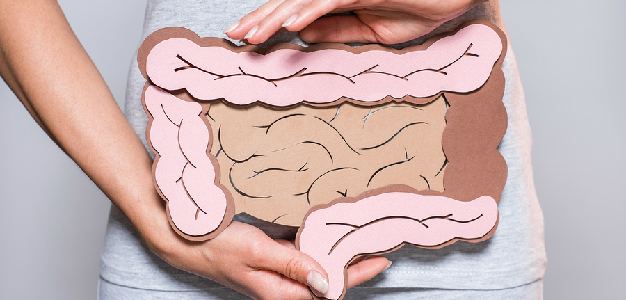
While GLP-1 drugs are remarkable for weight loss, they have side effects. But there are ways to draw on our own supply, drug-free.
We’d have to have been living under that proverbial rock to not have heard about these drugs in recent times. Everyone from Oprah to Whoopi Goldberg has apparently given them a go.
And they work, helping some people lose dramatic amounts of weight. They’ve also been hailed as the answer to heart disease, some types of cancer, Alzheimer’s, in fact most chronic diseases.
The main one is semaglutide, best known by brand names Ozempic or Wegovy.
In May this year, an article in an online publication for Australian GPs noted that the growth of semaglutide here has been ‘exponential’. In 2023-24 around 2.4 million prescriptions were written for it.
To oversimplify things, a semaglutide injection helps us keep healthy blood sugar levels. It also slows the passage of food through the intestines, making us feel more satisfied. Our brain then tells us we don’t need to eat any more, which helps to manage appetite.
But like all things that seem miraculous, there are downsides. Here are four.
One is that we don’t only lose fat. It’s estimated that around 40% of the weight lost in this way might come from muscle and bone — two types of tissue we need to hold on to.
If or when we come off the drug and the weight creeps back on, it’s easy to regain fat but not so easy to recover lost muscle and bone.
A second downside is the side-effects, such as nausea and diarrhea. When food sits in our gut for four or five times longer than normal it can make us feel sick. The usual wave-like action that moves it through the intestines slows down. It can also start to ferment and give us sulfur-smelling burps.
A third is that there can be an increased risk of depression and anxiety due to the impact of the drug on our brain chemistry, though this doesn’t seem to be thoroughly understood.
And fourth, it’s common to use GLP-1 drugs without developing other strategies to manage diet, appetite, and health. This isn’t wise because sooner or later — often around the two-year mark because of the side-effects — a lot of people stop using them. And if the only thing managing our food intake has been an injection, we’re likely to soon find our way back to where we started.
In addition, as we get older we need the best nutrition we can get to support healthy organs, blood vessels, bone, and so on. If we’re eating less, we need to eat better, but that rarely seems to be a priority.
What few of us realise though is that the drugs are a synthetic version of the GLP-1 hormone secreted naturally by our small intestine. We make our own.
Professor Ben Bikman is a metabolic researcher and professor at Brigham Young University in Utah. He studies insulin and its role in conditions such as type 2 diabetes, obesity, and dementia.
As he points out, the reason the drugs work is that they help reduce insulin resistance.
Insulin lowers blood sugar, but if our blood sugar is consistently high, our body has to produce extra insulin to try to manage it. Eventually, some of our cells develop a resistance to insulin.
This is a root cause of most chronic diseases. Of course, there are others, but if we can nail this one we do ourselves an enormous service.
Professor Bikman points to four ways we can increase our own GLP-1.
The first is yerba mate (pronounced mah-tay) tea. This South American brew stimulates the release of GLP-1 in the gut.
I tried it once, years ago, to sample the taste. To me it was like bitterness mixed with dirt, though not everyone agrees: Ben Bikman drinks it as his breakfast.
His second strategy is supplementing with collagen peptides, which he also believes can increase the body’s production of GLP-1. I hadn’t heard of this, but apparently, collagen can improve blood sugar regulation by making changes to the gut microbiome.
Mostly, collagen has been used to support skin and/or joints, and the evidence has seemed iffy. A key question has been whether the collagen we ingest finds its way to the places we want it to get to. He’s clear it does.
The third way to increase our GLP-1 is by eating a low-carb diet, which reduces cravings and overeating.
Professor Bikman notes that if we’re obese, GLP-1 levels can be impaired, so that high carbohydrate meals leave us feeling unsatisfied and wanting more to eat.
On the other hand, high fat meals result in a good GLP-1 response and we feel full. This happens even when the high carb and high fat meals contain the same number of calories. Fat is far more satiating than carbohydrate.
His advice is to control carbs, prioritise protein, and don’t fear fat, which could be a motto for healthy eating as we get older.
Finally, sleep plays an important role. Poor sleep can blunt GLP-1, which helps explain why we snack more and have cravings when we’re tired.
Exercise also helps reduce insulin resistance, but it’s important not to fall into the trap of thinking it can compensate for a poor diet.
In sum, while many people struggle to tolerate the drugs indefinitely, it’s worth knowing that we have our own in-built GLP-1 system. We just need to make the most of it.
Photo Source: Bigstock