
 0407 160 107
 View all blog posts
We’re encouraged by health authorities to eat these to reduce our LDL cholesterol. But is that good advice?
Plant sterols are obviously found in plants, such as nuts and seeds, fruit and veg, and wholegrains. Their molecular structure is so similar to that of cholesterol that they can compete with it for absorption from the gut.
While there are only small amounts of sterols in these kinds of plant foods, some manufactured products such as margarines and cereals contain considerably more.
Eating these can lower LDL cholesterol levels by around 10%, which is assumed to be a jolly good thing.
The Heart Foundation is in favour, as is the Victor Chang Cardiac Research Institute which advises replacing butter with margarine for this reason. Yes, still.
This is why vegetable or seed oils were promoted. They’re high in plant sterols. Unfortunately, they haven’t been shown to be as healthy as might have been originally suggested. I looked at those here last year, so I won’t rehash that story.
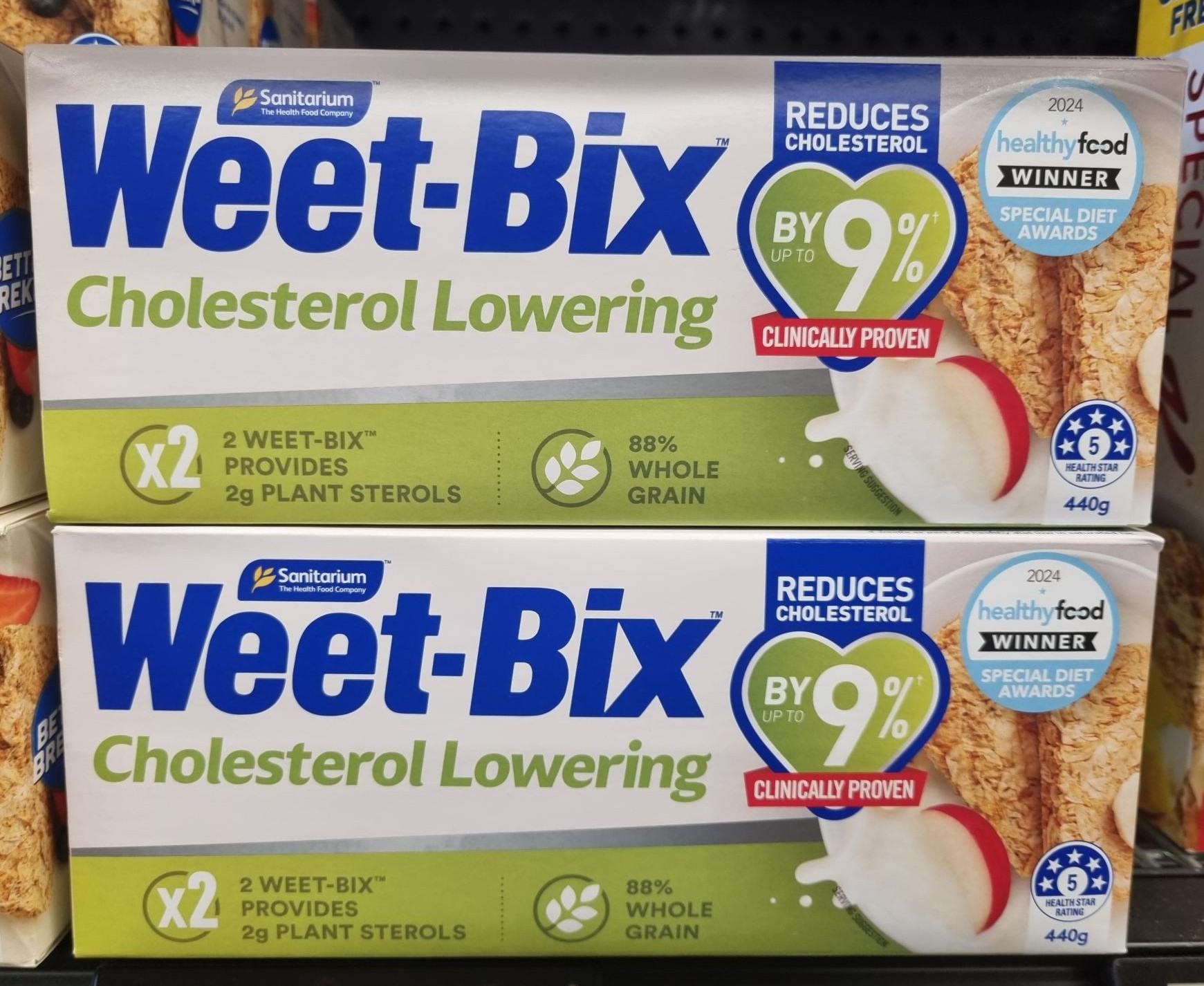
Seed oils aside, we can also get the recommended amount of sterols from two cholesterol lowering Weet-Bix, a tablespoon of Flora ProActiv margarine, or 500ml of Australia’s Own or Dairy Farmers 99% fat-free/Heart Active milk.
Estimates of the amount spent annually on these kinds of foods worldwide range between more than $400 million and $1.4 billion Australian dollars. So it’s a specific but lucrative market.
While plant sterols have been added to products for about 25 years, there’s just one small problem with them: there hasn’t been a single study showing that they reduce the risk of cardiovascular disease.
In fact, research in this area is a mixed bag and has mostly been done on mice.
A few times, teams of scientists have combed through it, but invariably they conclude that we’re missing clear results for cardiovascular health.
One review also noted that ‘data on the safety of plant-sterol supplementation derived from long-term clinical trials do not exist’.
So why doesn’t someone just do the research that’s needed?
As another recent review pointed out, it would require a very large number of participants (over 50,000) and be conducted over a long enough period to gather that kind of data. We can lower cholesterol in a few weeks, but lowering the risk of cardiovascular disease is another ballgame entirely.
In other words, it’s not feasible. Too big, too hard, too expensive. It will never be done.
An article written under the banner of the RACGP (the Royal Australian College of GPs) on plant sterols acknowledged this lack of evidence but argued that most patients whose cholesterol is above the recommended level would benefit from using them long-term anyway.
At the end came the conflict of interest note: ‘This review was partially funded by Goodman Fielder, a company who produce sterol containing spreads’.
As though they were ever going to take the funding and not recommend the products.
Our medical system is obsessed with lowering cholesterol, and plant sterols will do that, but there’s no evidence that this is a healthy endeavour in itself.
As I’ve noted plenty of times before, high cholesterol goes hand-in-hand with longevity in women, and about 50% of people who have a heart attack have perfectly normal LDL cholesterol.
Surely the aim should be to reduce our risk of cardiovascular disease. We also need to hope there are no adverse effects associated with eating these products over the long-term
When we lose sight of the real goal, which we clearly have, we need to be careful that we don’t start doing more harm than good.